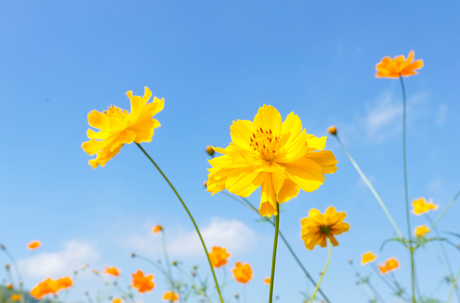
From $099 USDUnit price /Unavailable
Description

The Romano Pole Bean is a traditional Italian heirloom bean enjoyed by generations of gardeners. The vining plant produces high yields of flat, wide, stringless 6" pods that taste best when harvested young. Just a great all-around green bean.
- Easy to grow
- Stringless variety
- Harvest young for best flavor
- Vining plant requires staking
SEED PLANTING TIPS
- Botanical name: Phaseolus vulgaris
- Depth to plant seeds: 1" deep
- Spacing between plants: 5" apart
- Spacing between rows: 18"-24" apart
- Days to germinate (sprout): 8-14 days
- Germination soil temps: 70F-85F
- Soil needs: 6.0-7.0 pH
- Sun needs: Full sun
- Frost hardy: No
- Planting season: Spring, summer, fall
- # of plants per sq. ft.: Appx. 4 plants per sq. ft.
- Days to maturity: 65-80 days
Click here to view our full Bean grow guide
Good companion plants: Cucumber, Pea, Rosemary, Thyme, Tomato
 From $399 USDUnit price /Unavailable
Description
Licorice Basil is a type of Thai basil with a pleasant, sweet licorice flavor. Beautiful as a fragrant and ornamental accent throughout the garden, and delicious in salads, baked goods, and pasta sauce. It’s also pleasant to look at with deep green leaves that sometimes show a burgundy tinge, plum-colored stems, and lavender flower spikes that make a fun garnish for any salad, dish, or drink.Harvest the leaves and stems from the top part of the plant, and pinch off edible flower buds as they appear, which prevents the leaves from turning bitter, and signals the plant to branch out and grow more leaves, making a bushier plant.
The more you harvest, the more it grows!
- Sweet, pleasant licorice flavor
- Thai basil type
- Edible ornamental
- Good for containers
- Tons of medicinal benefits!
As a medicinal herb, Basil has been used internally to treat anxiety, colds, colic, cough, depression, diarrhea, fever, flatulence, flu, indigestion, insomnia, intestinal parasites and worms, exhaustion, gastric pain, gonorrhea, lactation problems, migraine headache, nausea, stomach cramps, sore throat, and vomiting, and externally to treat acne, insect bites and stings, loss of smell, skin problems, snake bites.
⚠️ Do not use medicinally while pregnant.
⚠️ Medicinal properties are presented as information only, and are not a recommendation or prescription for use. Consult a medical professional before using any herb medicinally.
As a companion plant, it attracts hummingbirds, pollinators, and beneficial insects, and repels asparagus beetles, cabbage moths, cabbage white butterfly, cabbage worms, carrot rust fly, flies, maggots, mice, mosquitoes, spider mites, thrips, and tomato hornworms.
Shop all Basil Seeds Shop Good Companion Plants for Basil 📚 Grow Guide: Basil 
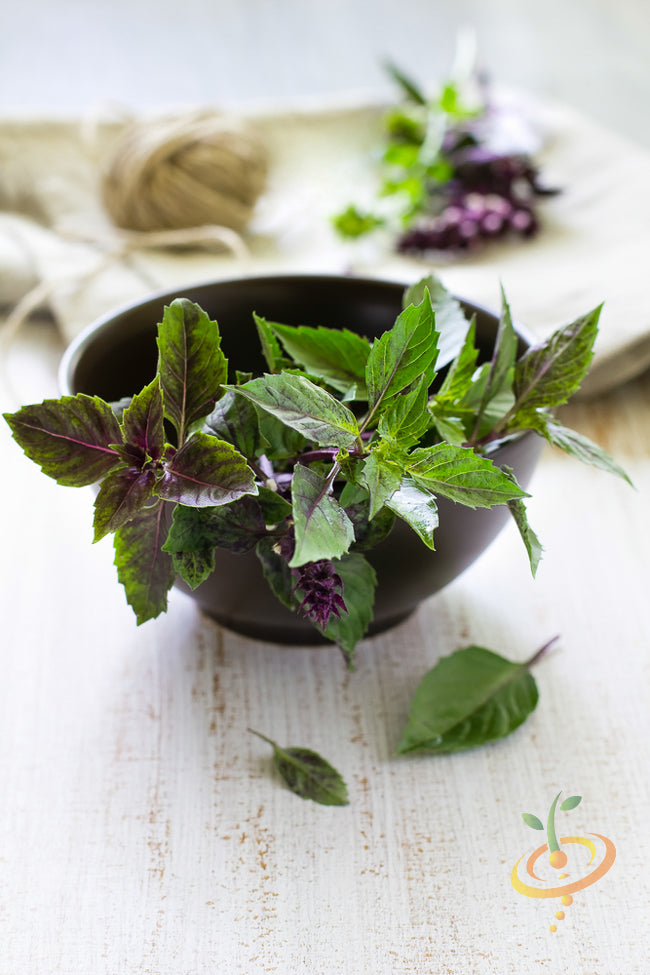
This basil variety produces lovely and flavorful green leaves with purple accents. It has a strong, but enjoyable licorice flavor and can grow up to 24" tall.

What is Licorice Basil?
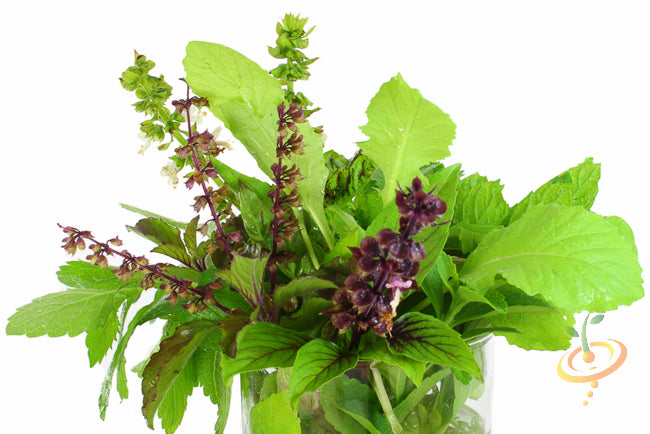
This basil is a type of Thai Basil, also known as anise basil. It has strong licorice and anise flavors, qualities and aromatics. It's known to be slightly "lanky" with pointed green leaves with signature purple flowers. Both the leaves and flowers are edible on this plant.
Health Benefits of Licorice Basil
Licorice Basil can be used for treating the common cold, the flu, diabetes, asthma, bronchitis, earaches, headaches, upset stomachs, heart disease, fever, and more. It promotes longevity but something you may not know is that its an excellent mosquito repellent!

Ways to Consume Licorice BasilWhen Licorice Basil leaves are crushed, they burst with intense basil and licorice aromas. Fragrant and floral, the spicy paste is a condiment for multiple dishes. This basil is best when mixed with other ingredients to tame it's powerful one-dimensional notes.

See Basil Recipes & Growing Tips on our Pinterest Board
Shop all Basil Seeds Shop Good Companion Plants for Basil 📚 Grow Guide: Basil  From $399 USDUnit price /Unavailable
Description
Greek Basil is a small-leaf dwarf variety that grows into a tight dome, about 1’ tall and wide. A great one for containers, hanging baskets, and indoor gardens. The bright green, oval leaves and soft stems have hints of clove and anise, and keep their flavor when dried. Use this variety to flavor herb butters and vinaigrettes, and the edible flowers as a garnish or salad green.Harvest the leaves and stems from the top part of the plant, and pinch off edible flower buds as they appear, which prevents the leaves from turning bitter, and signals the plant to branch out and grow more leaves, making a bushier plant.
The more you harvest, the more it grows!
- Basil-clove-anise flavor
- Compact plant
- Good for indoor gardens
- Good for containers
- Tons of medicinal benefits!
As a medicinal herb, Basil has been used internally to treat anxiety, colds, colic, cough, depression, diarrhea, fever, flatulence, flu, indigestion, insomnia, intestinal parasites and worms, exhaustion, gastric pain, gonorrhea, lactation problems, migraine headache, nausea, stomach cramps, sore throat, and vomiting, and externally to treat acne, insect bites and stings, loss of smell, skin problems, snake bites.
⚠️ Do not use medicinally while pregnant.
⚠️ Medicinal properties are presented as information only, and are not a recommendation or prescription for use. Consult a medical professional before using any herb medicinally.
As a companion plant, it attracts hummingbirds, pollinators, and beneficial insects, and repels asparagus beetles, cabbage moths, cabbage white butterfly, cabbage worms, carrot rust fly, flies, maggots, mice, mosquitoes, spider mites, thrips, and tomato hornworms.
Shop all Basil Seeds Shop Good Companion Plants for Basil 📚 Grow Guide: Basil

See Basil Recipes & Growing Tips on our Pinterest Board
Shop all Basil Seeds Shop Good Companion Plants for Basil 📚 Grow Guide: Basil -
Swiss Chard - Barese "Baby Leaf" Dark Green
From $399 USDUnit price /UnavailableDescription
- The Barese Swiss Chard variety produces delicious tender 10" tall dark glossy green leaves with curled edges
- A delicious baby leaf that grows quickly
- Ready to harvest in less than 30 days. Plant produces good yields of 10" tall leaves
- Excellent for salads and/or steamed with others greens
- Days to Maturity | Less than 30 days!
Additional DetailsSwiss chard is high in vitamins A, K and C, with a 175g serving containing 214%, 716%, and 53%, respectively, of the recommended daily value. It is also rich in minerals, dietary fiber and protein.
- The Barese Swiss Chard variety produces delicious tender 10" tall dark glossy green leaves with curled edges
-
Wildflowers - All Perennial Scatter Garden Seed Mix
From $499 USDUnit price /UnavailableDescription
 Includes a mix of 16 popular perennial flower varieties and colors. Scatter this mix of seeds in your garden and enjoy a beautiful assortment of flowers for multiple years.
A perennial plant or simply perennial is a plant that lives for more than two years. The term is often used to differentiate a plant from shorter-lived annuals and biennials. Wikipedia
Wildflower establishment requires some important steps:- Site selection/preparation: It's important to address competition from weeds: pull, till, or use organic herbicides. If planting in the spring/summer you can wait for weeds to germinate, control and then plant the wildflower seeds.
- Seeding: You will want to have good seed to soil contact, broadcasting by hand is a good approach on small plot, may want to mix with an inert carrier, sand or other. Raking in and covering with soil 2-3 times seed thickness.
- Watering: During establishment for the first month, can be from rain in spring or supplement with irrigation.
- Timing: The best time to plant is in spring to early summer and even again in late fall.
This mix includes all of the following seed varieties:GENUS/SPECIES
COMMON NAME
HEIGHT
COLOR

Achillea millefolium
White Yarrow
24-36"
W

Aquilegia vulgaris
Columbine
10-18"
R/V/B

Aster novae angliae
New England Aster
24-36"
B/P/W/P

Cheiranthus allionii
Siberian Wallflower
10-18"
O

Chrysanthemum maximum
Shasta Daisy
16-24"
W

Coreopsis lanceolata Dwarf
Lance-Leaf Coreopsis
18-36"
Y

Dianthus barbatus
Sweet William
12-24"
W/P/R

Echinacea purpurea
Purple Coneflower
24-36"
P

Gaillardia aristata
Blanketflower
18-30"
Y/R

Liatris spicata
Gayfeather
24-48"
P

Linum lewisii
Blue Flax
18-30"
B

Lupinus perennis
Lupine
12-36"
B

Oenothera missouriensis
Dwarf Evening Primrose
8-12"
Y

Ratibida columnifera
Mexican Hat
12-36"
R/Y

Ratibida columnifera
Prairie Coneflower
12-36"
Y

Rudbeckia hirta
Black Eyed Susan
18-30"
Y
W-White
R-Red
V-Violet
B-Blue
Y-Yellow
O-Orange
P-Purple
-
From $199 USDUnit price /Unavailable
Description
The Purple Podded Pole Bean produces a profuse plurality of purely purple pods. View this variety vegetate vigorous verdant vines with violet developments. Stringless shells surround savory seeds.
- Easy to grow
- High yielding
- Long pods up to 7"
- Easy to harvest
SEED PLANTING TIPS
- Botanical name: Phaseolus vulgaris
- Depth to plant seeds: 1" deep
- Spacing between plants: 5" apart
- Spacing between rows: 18"-24" apart
- Days to germinate (sprout): 8-14 days
- Germination soil temps: 70F-85F
- Soil needs: 6.0-7.0 pH
- Sun needs: Full sun
- Frost hardy: No
- Planting season: Spring, summer
- # of plants per sq. ft.: Appx. 4 plants per sq. ft.
- Days to maturity: 70-75 days
Click here to view our full Bean grow guide
Good companion plants: Cucumber, Pea, Rosemary, Thyme, Tomato
-
From $399 USDUnit price /Unavailable
Description
-
A very old heirloom variety dating back to the 1600's
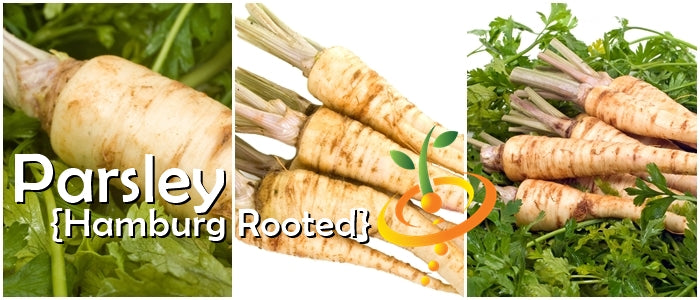
- Hamburg Rooted Parsley is used differently than other parsley plants. It's actually preferred by many European cooks and is typically the main ingredient for many stews
- Hamburg Rooted Parsley is a large edible root with smooth mild parsley flavor
- Very easy to grow
- In Europe root parsley is usually the first choice over parsnips
-
Day to Maturity | 85 days
-
A very old heirloom variety dating back to the 1600's
-
Angelica (Wild Celery / Holy Ghost)
From $399 USDUnit price /UnavailableDescription
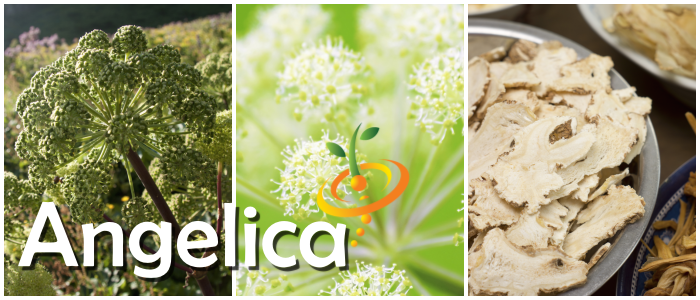
Angelica (Angelica archangelica), also called Wild Celery and Holy Ghost, is a fragrant herb in the carrot family. Like a carrot, it’s a biennial that flowers the second year, and it has a long thick root. But it’s not a carrot. For starters, it tastes like licorice. And the plant can grow to 4'-6' tall. It prefers cooler weather and growing near running water, so congrats if you’re gardening along the riverbanks of Utopia. The rest of us can just grow it in dappled shade and make sure the soil doesn’t dry out.
The flowers, leaves, seeds, stems, and roots are all edible. Peel the young, hollow, purple-tinged stems and use like celery, use the leaves like spinach, or make a tea from the leaves, flowers, seeds, and roots.
As a medicinal herb, Angelica has been used to treat anxiety, bladder infections, bronchitis, colds, cough, fever, flatulence, indigestion, insomnia, heartburn, lack of appetite, poor circulation, respiratory issues, typhus, and upset stomach.
Mild licorice flavorAll parts are edibleCulinary and medicinalGood fresh and cooked
As a companion plant, it attracts all sorts of friendly pollinators and beneficial insects.
⚠️ Medicinal properties are presented as information only, and are not a recommendation or prescription for use. Consult a medical professional before using any herb medicinally.
SEED PLANTING TIPS
- Botanical name: Angelica archangelica
- Life cycle: Herbaceous biennial
- Hardiness zones: 4-8
- Planting season: Spring, fall
- Days to maturity: 1-2 years; can begin harvesting when 6" tall
- Depth to plant seeds: Lightly cover - seeds need light to germinate
- Days to germinate (sprout): 14-28 days
- Germination soil temps: 60F-65F
- Spacing between plants: 18"-24" apart
- Spacing between rows: 24"-36" apart
- # of plants per sq. ft.: Appx. 1 plant per 2 sq. ft.
- Soil types: Clay, sandy, loamy, silty, moist, well-drained
- Soil pH: 4.5-7.4
- Sun needs: Full sun, part shade
- Water needs: High - keep soil moist
- Cold stratify: Yes
- Frost tolerant: Yes
- Heat tolerant: No
- Drought tolerant: No
- Deer resistant: No
- Culinary use: Yes
- Medicinal use: Yes
-
From $399 USDUnit price /Unavailable
Description

- Needs full sun to grow well
- It is drought tolerant and rarely, if ever needs to be watered
- Rue has a long history of use as a domestic remedy, being especially valued for its strengthening action on the eyes
- The plant contains flavonoids that reduce capillary fragility, which might explain the plants reputation as an eye strengthener.
- Days to Maturity | 75 days
**Warning** Although rue is safe when used correctly, it is considered a toxic herb that can cause side effects such as severe rashes, mood swings, sensitivity to light, stomach pains, dizziness, liver and kidney damage, sleep disorders & muscle spasms.
Follow SeedsNow.com's board Rue on Pinterest. -
From $399 USDUnit price /Unavailable
Description
View all bean seeds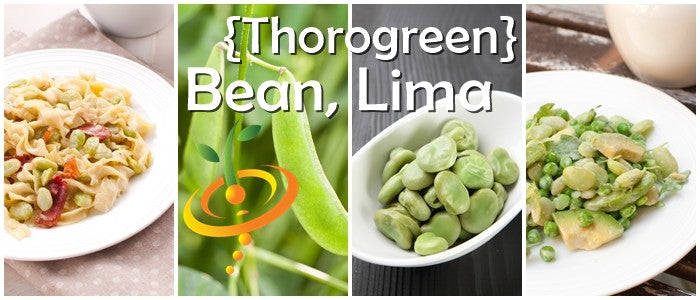
The Thorogreen Lima Bean is a high-yielding heirloom that loves higher temperatures. Plump, light green pods grow at the top of a compact plant for easy harvesting. Both fresh and dried beans have a smooth, buttery flavor. When eating fresh, be sure to cook them, as raw beans are toxic. This compact bush-type plant spreads wider than green beans, so give them room to grow.
- Easy to grow
- Bush growth habit
- Heat loving
- Early producer
SEED PLANTING TIPS
- Botanical name: Phaseolus lunatus
- Depth to plant seeds: 1.5" deep
- Spacing between plants: 6"-8" apart
- Spacing between rows: 24"-30" apart
- Days to germinate (sprout): 10-21 days
- Germination soil temps: 70F-90F
- Soil needs: 6.0-7.0 pH
- Sun needs: Full sun
- Frost hardy: No
- Planting season: Spring, summer, fall
- # of plants per sq. ft.: Appx. 2-4 plants per sq. ft.
- Days to maturity: 65-75 days
Click here to view our full Bean grow guide
Good companion plants: Cucumber, Pea, Rosemary, Thyme, Tomato
-
From $399 USDUnit price /Unavailable
Description

-
The Atlantic Giant pumpkin has been known to grow over 1,500 pounds! Without special treatment, the Atlantic Giant Pumpkin, can grow up to 200 to 300 pounds - easily
- It's best to plant 4 to 5 seeds per hill with hills at least 8 feet apart
-
Days to Maturity | 120 days
-
How to Grow Super Giant MEGA Pumpkins
Additional Details
The word pumpkin originates from the word pepon, which is Greek for “large melon". The French adapted this word to pompon, which the British changed to pumpion and later American colonists changed that to the word we use today, "pumpkin".
-
The Atlantic Giant pumpkin has been known to grow over 1,500 pounds! Without special treatment, the Atlantic Giant Pumpkin, can grow up to 200 to 300 pounds - easily

Cucumber - Armenian, White (Metki Serpent Melon)
From $399 USDUnit price /UnavailableDescription
- These Armenian cucumber seeds will produce delicious white cucumbers as long as 30"!
- Bitter-free with excellent flavor
-
Excellent slicer and ideal for salads and many culinary dishes
- Easy to grow
-
Days to Maturity | 65 days
-
Cucumber Seeds | Grow cucumbers where a long, warm growing season, minimum 65 days, can be assured. Plant seeds where there is ample space and vines can sprawl, the simplest way is to plant cucumbers in hills.
Click here for complete Cucumber grow guide
- These Armenian cucumber seeds will produce delicious white cucumbers as long as 30"!
-
Cover Crop - Clover (Red Crimson)
From $499 USDUnit price /UnavailableDescription
Quick Overview
• Biennial
• Bees love clover!
Details
Planted spring, summer or fall, this quick growing clover is the most versatile variety for a green manure to enrich soil. Needs good moisture. Flowers are used for tea. Excellent forage and cover crop. Planting rate: ½ lb. per 1,000 sq. ft. -
Corn Salad (Mache - Lamb's Lettuce) - French
From $399 USDUnit price /UnavailableDescription
- Valerianella locusta (aka Corn Salad) is a small annual plant that is eaten as a leaf vegetable. It has a characteristic nutty flavor, dark green color, and soft texture, and is popularly served as salad greens. //Wikipedia
- Corn Salad has a delicate flavor, similar to a butterhead lettuce. It is quite hardy and requires very little care while remaining practically free of pests & disease. Corn salad is also known for growing vigorously in almost any soil!
- We think Corn Salad tastes best right out of the garden with a light drizzle of olive oil and a squeeze of fresh lemon. Once you try this cold-hardy green, you'll be sure to make it a staple in your fall/winter gardens every year.
-
Day to Maturity | only 40 days

Pepper (Hot) - Hungarian Hot Wax 🔥
From $399 USDUnit price /UnavailableDescription

Zippy and snappy, the Hungarian Hot Wax Pepper offers a little sweet and a little heat, producing loads of peppers earlier than other varieties. Long 6" tapered fruit ripens from green to creamy yellow, which is when it’s just getting zippy. If you leave it be, it will keep going to orange and then red, increasing the heat with each color change. Thin-skinned, meaty, and crunchy. Try pickling in apple cider vinegar, frying up with onions to top an omelet, or stuffing with prosciutto and provolone.- Very high yields
- Meaty and crunchy
- Early producer
- Good for a short growing season
SEED PLANTING TIPS
- Botanical name: Capsicum annuum
- Pepper length: 4"-6"
- Scoville heat units (SHU): 2,000-10,000/mild to medium
- Plant support: Tomato cage or stake
- Depth to plant seeds: .25" deep
- Spacing between plants: 18"-24" apart
- Spacing between rows: 24"-36" apart
- Days to germinate (sprout): 7-21 days
- Germination soil temps: 75F-85F
- Soil needs: 6.0-7.0 pH
- Sun needs: Full sun
- Frost hardy: No
- Planting season: Spring, summer
- # of plants per sq. ft.: Appx. 1 plant per sq. ft.
- Days to maturity: 65-75 days
Good companion plants: Basil, Carrot, Cucumber, Eggplant, Okra, Rosemary, Sage, Squash, Tomato
All Peppers ⟐ Hot Peppers 📚 Hot Peppers Grow Guide -
Squash (Summer) - Marrow, Green
From $399 USDUnit price /UnavailableDescription
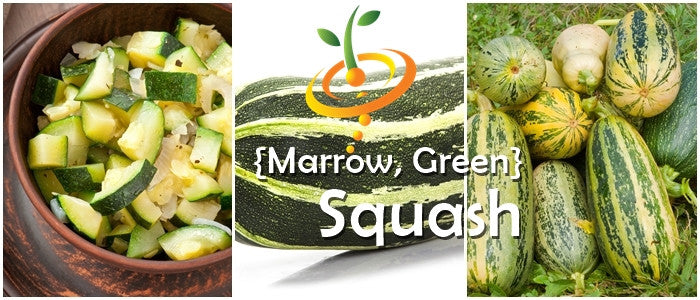
- The Green Marrow Summer Squash produces some of the most beautiful looking dark green squash
- Grows as a compact bush (not as a vine)
- Best when picked at 8" long
- Perfect for small gardens - grows on a compact bush
- Days to Maturity | 85 days
Additional DetailsThough considered a vegetable in cooking, botanically speaking, squash is a fruit (being the receptacle for the plant's seeds). Squash can be served fresh (in salads) and cooked (squash stuffed with meat, fried squash, baked squash).
-
From $399 USDUnit price /Unavailable
Description

Caraway is an ancient aromatic herb, famous for being the spice in rye bread and German sauerkraut. A biennial in the carrot family that grows 1'-3' tall, with feathery foliage and tiny white flowers. The seeds, which have an earthy-citrusy-peppery flavor, are the most used, but the flowers, leaves, stems, and root (which looks like a small parsnip, and can be used like any other root vegetable) are also edible. While you’re waiting for the flowers, seeds, and roots to develop in the second year, spend the first year using the leaves, which have a parsley-dill flavor, in salads, soups, and sautés.
- Parsley-dill flavor
- All parts are edible
- Culinary and medicinal uses
- Good for containers
As a companion plant, it attracts pollinators and beneficial insects, and repels aphids, cabbage moths, cabbage white butterfly, cabbage worms, carrot root fly, and caterpillars.As a medicinal herb, Caraway has been used internally to treat asthma, bad breath, bloating, colds, colic, cough, flatulence, heartburn, indigestion, insomnia, lack of appetite, nausea, sore throat, and stomach cramps, and externally to treat arthritis, bruises, burns, skin irritation, toothache, and wounds.
⚠️ Medicinal properties are presented as information only, and are not a recommendation or prescription for use. Consult a medical professional before using any herb medicinally.
SEED PLANTING TIPS
- Botanical name: Carum carvi
- Life cycle: Herbaceous biennial
- Hardiness zones: 4-9
- Planting season: Spring, fall
- Days to maturity: 70 days-2 years; can begin harvesting when 6" tall
- Depth to plant seeds: 1/4" deep
- Days to germinate (sprout): 7-14 days
- Germination soil temps: 65F-75F
- Spacing between plants: 8"-12" apart
- Spacing between rows: 18"-24" apart
- # of plants per sq. ft.: Appx. 2 plants per sq. ft.
- Soil types: Sandy, loamy, chalky, poor, rich, moist, well-drained
- Soil pH: 6.0-7.5
- Sun needs: Full sun, part shade
- Water needs: Average
- Cold stratify: No
- Frost tolerant: Yes
- Heat tolerant: No
- Drought tolerant: Yes
- Deer resistant: Yes
- Culinary use: Yes
- Medicinal use: Yes
Good Companion Plants: Bean, Beet, Blueberry, Broccoli, Brussels Sprouts, Cabbage, Carrot, Cauliflower, Chard, Collards, Fava Bean, Kale, Mustard, Onion, Pea, Radish, Soybean, Strawberry, Tomato


What is Caraway?Caraway is a biennial. This means it takes two years for the plant to mature, produce seeds, then die. During the winter you may not see any evidence of the plant even though the roots are preparing for spring. So mark your spot carefully so you don’t accidentally dig them up in the spring.
An interesting legend that goes along with Caraway is that it had the power to prevent the theft of objects that had seeds nearby and it also kept lovers from losing interest in one another. Still, some believe Caraway has beneficial healing powers and you can use the oil, fruit and seeds as medicine.

Health Benefits of CarawayWomen can use Caraway oil to relieve menstral cramps. Feeling bloated or have a bit of indigestion? Chewing on a few Caraway seeds can help relieve your symptoms!

Ways to Consume CarawayIf you want to consume the leaves, pick them when they are young and tender. The roots are also edible when the plant is young. Use Caraway seeds in baked goods, such as breads, and buns. Add them to vegetable and fruit dishes, especially curries. Use leaves and seeds alike to make hot and cold teas.
Caraway seeds have a sharp, pungent, slightly licorice taste that’s is delicious with green beans, potatoes, cabbage, onions, brussels sprouts, tomatoes, and apples. Try mixing it with cucumber and sour cream. It’s delicious with sausage and beef.


See Caraway Recipes & Growing Tips on our Pinterest Board
 From $499 USDUnit price /Unavailable
Description
Certified Organic. Arugula microgreens are the most popular. Chefs from all over the world utilize its crunchy tang in all kinds of salad dishes.
Very easy to grow.
Ready to consume after just a couple of days.
-
From $399 USDUnit price /Unavailable
Description
What happens when you remove the color from a pepper? The White Cloud Pepper is what happens. A lovely ivory hue, inside and out, glossy and pearly and sometimes tinged with purple. Like the clouds in the sky, they vary in shape and size from small to medium. Its bell pepper nature can’t quite be tamed, however, so the fruit turns green and then bright orange or red when it matures. The flavor endures as well. Sweet and mild with no heat and a definite crunch. Now, what happens when a gardener grows that white sweet pepper?- High yields
- Crunchy and sweet
- Harvest any color
- Good fresh and cooked
- Grows well in containers and tight spaces
SEED PLANTING TIPS
- Botanical name: Capsicum annuum
- Pepper size: Small-to-Medium/2"-5"
- Plant support: Tomato cage or stake
- Depth to plant seeds: .25" deep
- Spacing between plants: 18"-24" apart
- Spacing between rows: 24"-36" apart
- Days to germinate (sprout): 7-21 days
- Germination soil temps: 75F-85F
- Soil needs: 6.0-7.0 pH
- Sun needs: Full sun
- Frost hardy: No
- Planting season: Spring, summer
- # of plants per sq. ft.: Appx. 1 plant per 2 sq. ft.
- Days to maturity: 70-75 days
Good companion plants: Basil, Carrot, Cucumber, Eggplant, Okra, Rosemary, Sage, Squash, Tomato
All Peppers ⟐ Sweet Peppers 📚 Sweet Peppers Grow Guide 
Nasturtium - Glorious Gleam Flowers
From $399 USDUnit price /UnavailableDescription
Semi-trailing plant with fragrant flowers that come in a variety of shades and colors.
Depth to Plant
Spacing Between Plants
Days to Germinate (Sprout)
Germination
Soil TempBest Season to Plant_________
Sun
RequirementSoil
RequirementsGood Plant Companions
Harvest Instructions
1/2" Deep 12" Apart 7-10 Days Approx. 70 degrees F. Early Spring Full Sun Well drained and sandy Roses and most vegetables Harvest blooms regularly to encourage new growth. 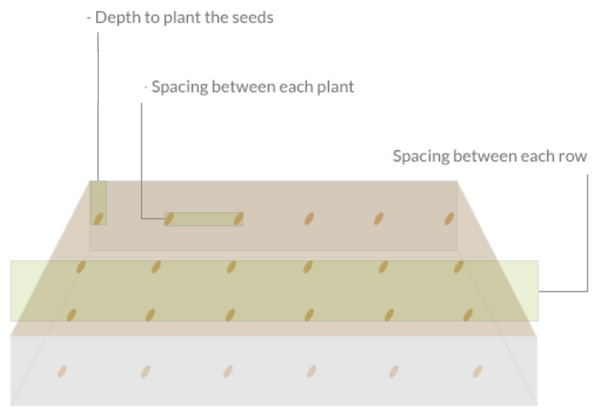
How to Grow & Harvest Nasturtiums When to Plant
Nasturtiums should be planted in the spring for a "summer show" once soil temperatures have reached around 70 degrees F.
- Nasturtium flowers are one of the most popular edible flowers grown in home gardens. The petals have a slight peppery taste, and the seeds and leaves are also edible! You can even use the seeds as an alternative to capers.
- Not only are the flowers pretty, Nasturtiums are great companion plants! They are also known to deter aphids, whiteflies, cucumber beetles & more. Learn more >
- Nasturtiums should be planted in the spring for a "summer show". Plant in full sun, and in sandy, well drained soil. Generally, the poorer the soil quality, the more flowers the plant will produce! Deadhead your plants regularly to encourage new blooms, all season long. These flowers will self-seed resulting in more flowers for years to come!
- These are PERFECT for beginner gardeners! These annuals are very easy to grow from seed and can be grown just about anywhere, even places that are susceptible to drought.
- The bright flower petals will liven up any garden, with very little effort! They are also GREAT for planting in hanging baskets or containers.


How to Plant
Plant in full sun, and in sandy, well drained soil. Generally, the poorer the soil quality, the more flowers the plant will produce! These seeds require darkness to germinate and will do best with planted a half of an inch deep, spaced at least 12" apart. Plants should appear within 7-10 days. These annuals are very easy to grow from seed and can be grown just about anywhere, even places that are susceptible to drought.When to Harvest
Deadhead your plants regularly to encourage new blooms, all season long. These flowers will self-seed resulting in more flowers for years to come!-
From $399 USDUnit price /Unavailable
Description

- Beautiful bright lime green lettuce leaves
- This is the green alternative to Lollo Rossa
- Compact and curly with amazing flavor
- Extremely popular amongst gourmet chefs and restaurants
- Easy to grow and does not require a lot of space
-
Days to Maturity | 50 days
-
Lettuce Seeds | Lettuce can be grown practically anywhere. For leaf types seed should be sown thinly in rows 1 foot apart. For head, Bibb, and cos types, space rows 18 inches apart.
Click here for complete Lettuce grow guide
- Beautiful bright lime green lettuce leaves
-
Pepper (Hot) - Jalapeño, Yellow (Caloro) 🔥
From $399 USDUnit price /UnavailableDescription
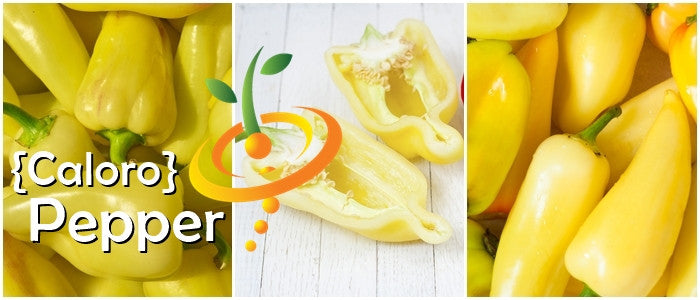
The Caloro Pepper is a gilded name for the Yellow Jalapeño Pepper. If you grow these, it will help to have two things: lots of friends and lots of bags, because you are going to have lots of these hot peppers to share. This prolific plant produces 2"-3" tapered fruits continuously, all summer long, maturing from yellow to orange to red. Continuously. Yellow, orange, red. All summer long. Yellow, orange, red. Thick-skinned, sweet, and crunchy with a heat that’s milder than a Green Jalapeño, but still quite spicy. Yellow, orange, red. Continuously, all summer long.
- Very high yields
- Ever-bearing
- Hot jalapeño flavor
- Harvest any color
SEED PLANTING TIPS
- Botanical name: Capsicum annuum
- Pepper length: 2"-3"
- Scoville heat units (SHU): 1,000-5,000/mild to medium
- Plant support: Tomato cage or stake
- Depth to plant seeds: .25" deep
- Spacing between plants: 18"-24" apart
- Spacing between rows: 24"-36" apart
- Days to germinate (sprout): 7-21 days
- Germination soil temps: 75F-85F
- Soil needs: 6.0-7.0 pH
- Sun needs: Full sun
- Frost hardy: No
- Planting season: Spring, summer
- # of plants per sq. ft.: Appx. 1 plant per sq. ft.
- Days to maturity: 75-85 days
Good companion plants: Basil, Carrot, Cucumber, Eggplant, Okra, Rosemary, Sage, Squash, Tomato
All Peppers ⟐ Hot Peppers 📚 Hot Peppers Grow Guide -
From $399 USDUnit price /Unavailable
Description

- A 1957 All-America Selections (AAS) Winner
- Plant produces good yields of flavorful curly dark green leaves
- Perfect for salads
- Stays in the ground 2 - 4 weeks longer than other mustard varieties
- Tolerates the cold extremely well
- Perfect for home gardens and market growers
- Easy to grow
-
Days to Maturity | 45 days
-
Mustard Seeds | When growing from seed, start them outdoors 3 weeks before the last frost. Plant seeds a 1/2" deep, and thin to 3 inches.
Click here for complete Mustard grow guide
Additional Details
Mustard greens are extremely high in Vitamin A, B, and C.
- A 1957 All-America Selections (AAS) Winner
-
Sprouts/Microgreens - Mustard, Mizuna (Green)
From $399 USDUnit price /UnavailableDescription
Mustard, Sprouts & Micro-Greens
- Mustard is a member of the crucifer family.
- Mustard greens are a popular dish in the Southern U.S. and are an excellent source of vitamins A and C.
- Mustard sprouts have a strong spicy flavor and are usually blended with alfalfa or clover sprouts.
Follow SeedsNow.com's board Mustard on Pinterest. - Mustard is a member of the crucifer family.
-
Shungiku, Edible Chrysanthemum
From $399 USDUnit price /UnavailableDescription
- Shungiku, Edible Chrysanthemum is a very versatile asian green
- Known as Shungiku, Edible Chrysanthemum, Garland Chrysanthemum, Chop Suey Greens and many other names
- This is a salad green that can be grown in winter and again in spring
- The flowers of Shungiku can be dried and stored to be used for tea. Often considered a substitute for Chamomile - with its soothing and stomach quieting properties
-
Days to Maturity | 30 - 50 days
- Shungiku, Edible Chrysanthemum is a very versatile asian green
-
Wildflowers - Poppy Scatter Garden Seed Mix
From $499 USDUnit price /UnavailableDescription

Includes a mix of 6 of the most vibrant and beautiful Poppy flower varieties. Scatter this mix in your garden and enjoy a beautiful assortment of Poppy flowers!
Wildflower establishment requires some important steps:- Site selection/preparation: It's important to address competition from weeds: pull, till, or use organic herbicides. If planting in the spring/summer you can wait for weeds to germinate, control and then plant the wildflower seeds.
- Seeding: You will want to have good seed to soil contact, broadcasting by hand is a good approach on small plot, may want to mix with an inert carrier, sand or other. Raking in and covering with soil 2-3 times seed thickness.
- Watering: During establishment for the first month, can be from rain in spring or supplement with irrigation.
- Timing: The best time to plant is in spring to early summer and even again in late fall.
This mix includes all of the following seed varieties:GENUS/SPECIES
COMMON NAME

Eschscholzia californica
California Poppy Orange

Eschscholzia californica
California Poppy White

Eschscholzia californica
Mikado

Eschscholzia californica
Mission Bells

Papaver rhoeas
Red Corn Poppy

Papaver rhoeas
Shirley Mix Poppy
-
Squash (Summer) - Lebanese White Bush
From $099 USDUnit price /UnavailableDescription
- The Lebanese Squash is a very popular heirloom squash variety that grows extremely quickly - only 45 days
- Very flavorful and widely grown in the Middle East
-
A summer squash variety from Lebenon
-
Grows as a compact bush size plant (not as a vine)
- Fast-growing summer squash produces large yields
- Perfect for growing in small spaces
-
Days to Maturity | 45 days
The Lebanese, White Squash is a favorite amongst many home gardeners. Most would recommend planting 2-4 bushes to feed a family throughout the season, while for smaller families or couples, 2 plants would be plenty. It really depends on how much squash you love to eat and whether or not you're growing other varieties at the same time. We do however recommend planting at least two plants for better pollination. The better the pollination, the better the fruit count! It's been reported that some gardeners have experienced up to 15 fruits per plant, however, that is on the high side. Most plants will produce 4-6 fruit, again depending on the pollination and other variables that come into play. There's just not an exact answer for this. You're almost at the mercy of mother nature on this, but most would agree it's a great producer! They're better picked when young and tender unless you're planning on stuffing them, then baking. In that case, they are let to grow larger, again, which will keep the plant from producing more fruit if you don't harvest regularly from them. So the bottom line is, if you want more fruit, harvest more regularly and when the squash is young and tender. This will send signals to the plant to bloom and flower again to keep reproducing. Generally, this plant will get 2-3 feet high, but regular fertilizing would, of course, alter these numbers as well. If your soil is in good condition with lots of healthy organic matter, you should have no problem getting plants that reach this size. May we suggest growing on black plastic for weed & insect control?
Additional Details
Though considered a vegetable in cooking, botanically speaking, squash is a fruit (being the receptacle for the plant's seeds). Squash can be served fresh (in salads) and cooked (squash stuffed with meat, fried squash, baked squash).
- The Lebanese Squash is a very popular heirloom squash variety that grows extremely quickly - only 45 days
-
Wildflowers - All Annual Scatter Garden Seed Mix
From $499 USDUnit price /UnavailableDescription
 Includes a mix of 21 popular annual flower varieties and colors. Scatter this mix of seeds in your garden and enjoy a beautiful assortment of flowers all year.Wildflower establishment requires some important steps:- Site selection/preparation: It's important to address competition from weeds: pull, till, or use organic herbicides. If planting in the spring/summer you can wait for weeds to germinate, control and then plant the wildflower seeds.
- Seeding: You will want to have good seed to soil contact, broadcasting by hand is a good approach on small plot, may want to mix with an inert carrier, sand or other. Raking in and covering with soil 2-3 times seed thickness.
- Watering: During establishment for the first month, can be from rain in spring or supplement with irrigation.
- Timing: The best time to plant is in spring to early summer and even again in late fall.
This mix includes all of the following seed varieties:GENUS/SPECIES
COMMON NAME
TYPE
HEIGHT
COLOR

Calendula officinalis
Calendula
A
12 to 24
Yello/Orange/Cream

Centaurea cyanus
Bachelor Button
A
12 to 36
Blue or Mix

Cheiranthus allionii
Siberian Wallflower
B/P
10 to 18
Orange

Coreopsis tinctoria
Plains Coreopsis
A
12 to 36
Yellow-Maroon

Cosmos bipinnatus
Cosmos
A
36 to 60
White/Pink/Crimson/Rose

Delphinium ajacis
Rocket Larkspur
A
12 to 36
White/Pink/Blue/Violet

Dimorphotheca aurantiaca
African Daisy
A
8 to 16
Orange/Salmon/White

Eschscholtzia californica
California Poppy
TP
12 to 18
Yellow/Orange

Gaillardia pulchella
Indian Blanket
A
12 to 24
Yellow-Red

Gilia tricolor
Bird's Eyes
A
12 to 18
Lavender-White

Gypsophila elegans
Baby's Breath
A
8 to 18
White

Iberis umbellata
Candytuft
A
12 to 18
White/Pink/Violet

Linaria maroccana
Spurred Snapdragon N. Lights
A
12 to 124
Pink/Yellow/Violet

Linum grandiflorum rubrum
Scarlet Flax
A
12 to 36
Scarlet

Lobularia maritima
Sweet Alyssum
TP
8 to 16
White

Lupinus hartwegii
Lupine
A
12 to 24
Mix

Oenothera lamarckiana
Evening Primrose
B/P
24 to 60
Yellow

Papaver rhoeas
Corn Poppy
A
12 to 30
White/Pink/Red

Phacelia campanularia
California Bluebells
A
8 to 20
Blue

Rudbeckia hirta
Black Eyed Susan
A/B/P
12 to 36
Yellow

Silene armeria
Catchfly
A/B
16 to 22
Pink
-
Wildflowers - Partial Shade Scatter Garden Seed Mix
From $499 USDUnit price /UnavailableDescription
 Plant this mix in an area of your garden that gets partial shade. Includes a mix of 15 different shade tolerant (less than 6 hours of sunlight per day) flower varieties.
Wildflower establishment requires some important steps:- Site selection/preparation: It's important to address competition from weeds: pull, till, or use organic herbicides. If planting in the spring/summer you can wait for weeds to germinate, control and then plant the wildflower seeds.
- Seeding: You will want to have good seed to soil contact, broadcasting by hand is a good approach on small plot, may want to mix with an inert carrier, sand or other. Raking in and covering with soil 2-3 times seed thickness.
- Watering: During establishment for the first month, can be from rain in spring or supplement with irrigation.
- Timing: The best time to plant is in spring to early summer and even again in late fall.This mix includes the following:
GENUS/SPECIES
COMMON NAME
TYPE
HEIGHT

Aquilegia vulgaris
Garden Columbine
P
10-18"

Centaurea cyanus
Bachelor's Button
A
12-36"

Cheiranthus allionii
Siberian Wallflower
B/P
10-18"

Chrysanthemum maximum
Daisy Chrysanthemum
P
16-24"

Clarkia elegans
Clarkia Mix
A
18-30"

Coreopsis lanceolata
Lance Leaf Coreopsis
P
18-36"

Coreopsis tinctoria
Plains Coreopsis
A
12-36"

Cynoglossum amabile
Chinese Forget-Me-Not
A/B
18-24"

Delphinium consolida
Rocket Larkspur
A
12-36"

Dianthus barbatus
Sweet William
P
12-24"

Digitalis purpurea
Common Foxglove
B/P
24-48"

Gypsophila elegans
Annual Baby's Breath
A
8-18"

Lavatera trimestris
Rose Mallow
A
24-48"

Nemophila menziesii
Baby Blue Eyes
A
4-12"

Papaver rhoeas
Shirley Poppy
A
12-30"
A-Annual
59%
P-Perennial
15%
B-Biennial
26%
-
Nasturtium - Peach Melba Flowers
From $399 USDUnit price /UnavailableDescription
This variety produces cream-like, yellow petals with splashes of darker red in the center. Compact in size with deep blue/green foliage.
- Nasturtium flowers are one of the most popular edible flowers grown in home gardens. The petals have a slight peppery taste, and the seeds and leaves are also edible! You can even use the seeds as an alternative to capers.
- Not only are the flowers pretty, Nasturtiums are great companion plants! They are also known to deter aphids, whiteflies, cucumber beetles & more. Learn more >
- Nasturtiums should be planted in the spring for a "summer show". Plant in full sun, and in sandy, well drained soil. Generally, the poorer the soil quality, the more flowers the plant will produce! Deadhead your plants regularly to encourage new blooms, all season long. These flowers will self-seed resulting in more flowers for years to come!
- These are PERFECT for beginner gardeners! These annuals are very easy to grow from seed and can be grown just about anywhere, even places that are susceptible to drought.
- The bright flower petals will liven up any garden, with very little effort! They are also GREAT for planting in hanging baskets or containers.
-
Wildflowers - Fragrant Flower Scatter Garden Seed Mix
From $499 USDUnit price /UnavailableDescription
 Includes a mix of 18 popular fragrant flower varieties and colors. Scatter this mix of seeds in your garden and enjoy the most fragrant flower assortment you've ever smelt.Wildflower establishment requires some important steps:- Site selection/preparation: It's important to address competition from weeds: pull, till, or use organic herbicides. If planting in the spring/summer you can wait for weeds to germinate, control and then plant the wildflower seeds.
- Seeding: You will want to have good seed to soil contact, broadcasting by hand is a good approach on small plot, may want to mix with an inert carrier, sand or other. Raking in and covering with soil 2-3 times seed thickness.
- Watering: During establishment for the first month, can be from rain in spring or supplement with irrigation.
- Timing: The best time to plant is in spring to early summer and even again in late fall.
This mix includes all of the following seed varieties:GENUS/SPECIES
COMMON NAME

Centaurea cyanus
Cornflower

Cheiranthus allionii
Siberian Wallflower

Cynoglossum amabile
Chinese Forget Me Not

Dianthus barbatus
Sweet William
Gilia tricolor
Bird's Eyes

Iberis umbelleta
Candytuft

Lathyrus odoratus
Sweet Pea

Lavender Vera
Lavender

Lobularia maritima
Sweet Alyssum

Matthiola bicornis
Evening Scented Stock

Mirabilis jalapa
Four O' Clock

Monarda punctata
Spotted Bee Balm

Nicotiana affinis
Tabacco mix

Oenothera lamarkiana
Evening Primrose

Reseda ordorata
Mignonette

Tagetes patula
Marigold Sparky

Tropaeulum majus
Nasturtium

Viola cornuta
Helen Mount
-
Wildflowers - Coneflower Scatter Garden Seed Mix
From $499 USDUnit price /UnavailableDescription
 Includes a mixture of 6 popular coneflower varieties. Scatter this mix in your garden and enjoy a beautiful assortment of coneflowers!
Wildflower establishment requires some important steps:
- Site selection/preparation: It's important to address competition from weeds: pull, till, or use organic herbicides. If planting in the spring/summer you can wait for weeds to germinate, control and then plant the wildflower seeds.
- Seeding: You will want to have good seed to soil contact, broadcasting by hand is a good approach on small plot, may want to mix with an inert carrier, sand or other. Raking in and covering with soil 2-3 times seed thickness.
- Watering: During establishment for the first month, can be from rain in spring or supplement with irrigation.
- Timing: The best time to plant is in spring to early summer and even again in late fall.
This mix includes all of the following seed varieties:GENUS/SPECIES
COMMON NAME

Echinacea purpurea
Purple Coneflower

Echinacea palladia
Pale Purple Coneflower

Rudbeckia amplexicaulis
Clasping Coneflower

Ratibida columnifera
Red Mexican Hat

Ratibida columnifera
Yellow Prairie Coneflower

Ratibida pinnata
Greyheaded Coneflower
-
From $399 USDUnit price /Unavailable
Description

The Tepin Pepper is a tiny treat with a lot of heat. Compact, vigorous plants produce lots of juicy, pea-sized fruits that are hot enough to make a cookie crumble. This is a perennial bush in warmer locations, so if it survives the winter, it will grow back bigger and more productive. Use it to heat up anything from honey to menudo to ice cream.
- High yields
- Perennial
- Slow to germinate
- Good for containers
SEED PLANTING TIPS
- Botanical name: Capsicum annuum
- Pepper size: 1/4"-1/2"
- Scoville heat units (SHU): 50,000-100,000/hot
- Plant support: Tomato cage or stake
- Depth to plant seeds: .25" deep
- Spacing between plants: 24"-36" apart
- Spacing between rows: 36"-48" apart
- Days to germinate (sprout): 28-70 days
- Germination soil temps: 75F-85F
- Soil needs: 6.0-7.0 pH
- Sun needs: Full sun
- Frost hardy: Yes
- Planting season: Spring, summer
- # of plants per sq. ft.: Appx. 1 plant per 2 sq. ft.
- Days to maturity: 120-200 days
Good companion plants: Basil, Carrot, Cucumber, Eggplant, Okra, Rosemary, Sage, Squash, Tomato
- These Tepin pepper seeds will produces tons of of ¼" pea-sized hot peppers.
- Extremely hot. Handle with care
- They will turn from green -> to orange -> to red as they continue to mature
- Some claim this variety to be one of the Hottest Pepper in the World
- It can sometimes take the seeds about 4-10 weeks to germinate - so patience is a virtue with these babies but definitely worth it in the end
- Plant height is approximately 2' - 3'
- Highest germination rates occur during the warmer months - around at 80 F or higher
- Grows extremely well in small to medium sized containers
- If you like hot peppers then this variety is a definite must have
All Peppers ⟐ Hot Peppers 📚 Hot Peppers Grow Guide -
Wildflowers - Righteous Red Scatter Garden Seed Mix
From $499 USDUnit price /UnavailableDescription

Includes a mix of 10 of the most vibrant and beautiful red colored flower varieties. Scatter this mix in your garden and enjoy a beautiful assortment of red flowers!
Wildflower establishment requires some important steps:- Site selection/preparation: It's important to address competition from weeds: pull, till, or use organic herbicides. If planting in the spring/summer you can wait for weeds to germinate, control and then plant the wildflower seeds.
- Seeding: You will want to have good seed to soil contact, broadcasting by hand is a good approach on small plot, may want to mix with an inert carrier, sand or other. Raking in and covering with soil 2-3 times seed thickness.
- Watering: During establishment for the first month, can be from rain in spring or supplement with irrigation.
- Timing: The best time to plant is in spring to early summer and even again in late fall.
This mix includes all of the following seed varieties:GENUS/SPECIES
COMMON NAME

Centaurea cyanus
Cornflower Tall Red

Eschscholzia californica
Mikado

Linum rubrum
Scarlet Flax

Lychinis chalcedonica
Maltese Cross

Papaver rhoeas
Red Corn Poppy

Papaver rhoeas
Shirley Single Mix

Phlox drummondii
Annual Red

Tagetes erecta
French Marigold

Trifolium incarnatum
Crimson Clover

Zinnia elegens
Zinnia Red
-
Wildflowers - Exotic Mountain Scatter Garden Seed Mix
From $499 USDUnit price /UnavailableDescription
 Includes a mix of 17 of the most vibrant and beautiful flower varieties you've ever seen. Scatter this mix in your garden. Specifically for elevations above 7,000 feet in western continental U.S.Wildflower establishment requires some important steps:- Site selection/preparation: It's important to address competition from weeds: pull, till, or use organic herbicides. If planting in the spring/summer you can wait for weeds to germinate, control and then plant the wildflower seeds.
- Seeding: You will want to have good seed to soil contact, broadcasting by hand is a good approach on small plot, may want to mix with an inert carrier, sand or other. Raking in and covering with soil 2-3 times seed thickness.
- Watering: During establishment for the first month, can be from rain in spring or supplement with irrigation.
- Timing: The best time to plant is in spring to early summer and even again in late fall.
This mix includes all of the following seed varieties:GENUS/SPECIES
COMMON NAME
HEIGHT
TYPE
COLOR
Aquilegia caerulea
Columbine
24"-36"
P
Y, R, V, B

Centaurea cyanus
Cornflower
12"-36"
A
B or mix

Cheiranthus allionii
Siberian Wallflower
16"-24"
B/P
O

Chrysanthemum maximum
Shasta Daisy
16"-24"
P
W

Coreopsis tinctoria
Plains Coreopsis
12"-36"
A
Y, M

Dianthus barbatus
Sweet William
12"-24"
P
W,P,R

Dimorphotheca aurantiaca
African Daisy
8"-16"
A
O,S,W

Eschscholtzia californica
California Poppy
12"-18"
A
Y,O

Gaillardia aristata
Perennial Gaillardia
18"-30"
PA
Y,R

Gypsophila elegans
Annual Baby's Breath
8"-18"
P
W

Linum lewisii
Blue Flax
18"-30"
B/P
B

Lobularia maritima
Sweet Alyssum
8"-16"
P
W

Oenothera lamarckiana
Evening Primrose
24"-60"
B/P
Y

Penstemon strictus
Rocky Mtn. Penstemon
24"-36"
P
B

Ratibida columnifera
Prairie Coneflower
12"-36"
B/P
R,Y

Rudbeckia hirta
Black Eyed Susan
12"-36"
A/B/P
Y

Silene armeria
Catchfly
16"-22"
A
P
A-Annual
52%
Y- YELLOW
P-Perennial
24%
R-Red
B-Biennal
24%
V-Violet
B-Blue
W-White
M-Maroon
O-Orange
P-Purple
S-Salmon
-
From $099 USDUnit price /Unavailable
Description
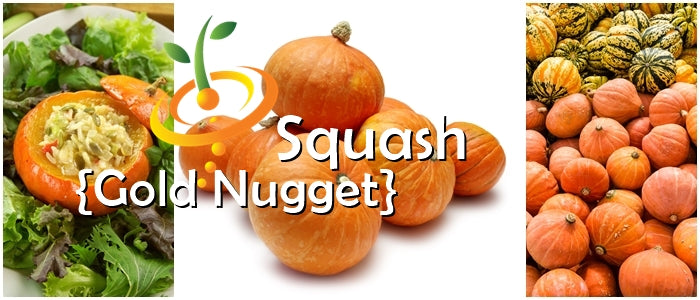
Gold Nugget Winter Squash Seeds
(100% Heirloom/Non-Hybrid/Non-GMO)-
The Gold Nuggest squash is popular 3 lb fruit that is extremely delicious.
- Grows as a compact bush (not as a vine).
- Orange/yellow colored flesh.
- Very sweet and full of flavor - perfect for roasting or baking.
- Ideal for any sized garden and easy to grow.
- Day to Maturity | 80 days
Additional DetailsThough considered a vegetable in cooking, botanically speaking, squash is a fruit (being the receptacle for the plant's seeds). Squash can be served fresh (in salads) and cooked (squash stuffed with meat, fried squash, baked squash).
-
The Gold Nuggest squash is popular 3 lb fruit that is extremely delicious.

Sprouts/Microgreens - Kale, Red Russian
From $499 USDUnit price /UnavailableDescription

Kale Red Russian Micro-Greens
- Really easy to grow.
- Just let them grow until you see the first set of true leaves.
- Perfect for a micro-green salad.
- Makes a great addition to many culinary dishes.
- These sprouts have a mildly sweet flavor.
- Day to Maturity | 3-6 days
- Really easy to grow.
-
Squash (Winter) - Long Island Cheese
From $325 USDUnit price /UnavailableDescription
 Squash (Winter), Long Island Cheese (100% Heirloom/Non-Hybrid/Non-GMO)
-
The Long Island Cheese squash plant produces excellent yields of 10 pound squash resembling a wheel of cheese.
- Grows as a vine (not as a bush)
- Popular heirloom variety passed down for many generations
- The orange flesh is very sweet and can be used for making pie during the autumn months
- Widely grown by people all across New York and New Jersey - Day to Maturity | 100 days
- Best Months to Plant | [March - June] Winter squash love the sun and can't get enough of it. They need about 3 months of warm temperature and one additional month of cooler temps to fully mature.


-
The Long Island Cheese squash plant produces excellent yields of 10 pound squash resembling a wheel of cheese.
-
Sprouts/Microgreens - Radish, Rambo (Red)
From $499 USDUnit price /UnavailableDescription
-
Organic
-
Spicy
-
Very beautiful red sprouts
- Popular amongst many culinary chefs
-
Tastes like fully grown radish. If you like the taste of radish you'll love Radish Sprouts!
Follow SeedsNow.com's board Radish on Pinterest. -

Sprouts/Microgreens - Beet, Dark Red
From $499 USDUnit price /UnavailableDescription
These Dark Red Beets grow into gorgeous, tender sprouts with deep red shoots and delicate green leaves. An amazing earthy flavor rounds out this extremely rewarding micro-green.
Beets can be the more difficult sprout to grow… but well worth it! It's the prettiest sprout there is (flame red) and can make any plate look and taste even better.
Beets like warm air 75 - 78 degree temperature, humidity 80 - 86%, water temperature 70 degrees) and low light in the room for the first 3 days. The outer surface of a beet seed is like a sponge and can absorb a great amount of water. Please read these instructions carefully:
Proper way to sprout Beet seed:
- Put beet seed in a bucket/tub/container
- Let the seeds soak in warm (not boiling and not cold) water for approx. 8 hours. Stir well in about 4 hours.
- Put in colander and Rinse with lukewarm water until the water that comes off is no longer brown.
⚠️ This is important, as red beet has the above water soluble anti-sprouting components (slime) on its hulls. This is a protection: otherwise, in nature, red beet would sprout in an environment that is not humid enough. Clever seed, isn’t it? - Set aside in a warm room. Give NO WATER and it will sprout in approx. 24-48 hrs.
- Then, water as you would any of your other sprouts & micro-greens
Happy planting!

Gourd - Large Bottle "Birdhouse"
From $099 USDUnit price /UnavailableDescription

- Just as the name suggests, this style of gourd will produce something that looks like a large bottle
- Colors will vary
- Many people use this variety to make birdhouses
- Grows as a vine
- Just as the name suggests, this style of gourd will produce something that looks like a large bottle
-
From $399 USDUnit price /Unavailable
Description
Tansy is a very powerful and popular herb. We recommend that you do a Google search to learn more about all the benefits and uses this plant has to offer. Happy planting!
....
-
From $399 USDUnit price /Unavailable
Description

- Poterium sanguisorba. Perennial. Keep flowers cut to promote leaf growth
- Plant produces serrated leaves that tastes and smells like cucumbers
- Can be used in salads, soups, stews, and flavored drinks
- Can also be used in facial treatments to improve skin
- Plant Height: 18" tall
- Days to Maturity | 75 days
- Poterium sanguisorba. Perennial. Keep flowers cut to promote leaf growth

Sprouts/Microgreens - Chives, Garlic
From $499 USDUnit price /UnavailableDescription
Garlic Chives will produce shoots that grow to a mature height of roughly 12 inches tall. Popularly used to flavor potatoes and salads, Chives are not only tasty, but are also attractive as well. Each plant displays white colored flowers atop slender stems / shoots. Flowering much later than traditional Chives, it’s Garlic twins will bloom within the heat of the summer months. The shoots, once cut will add a slight garlic & onion flavor to any dish that they are added to. The flowers also add a mild onion/garlic flavor and can be used as a garnish.
Very easy to grow.
Country of Origin: Italy
Ready to consume after just a couple of days.
-
Wildflowers - Deer Resistant Scatter Garden Seed Mix
From $499 USDUnit price /UnavailableDescription
 Includes a mix of the 22 of the most popular flower varieties that deer are known to stay away from. Scatter this mix of seeds in your garden and keep the deer away.Wildflower establishment requires some important steps:- Site selection/preparation: It's important to address competition from weeds: pull, till, or use organic herbicides. If planting in the spring/summer you can wait for weeds to germinate, control and then plant the wildflower seeds.
- Seeding: You will want to have good seed to soil contact, broadcasting by hand is a good approach on small plot, may want to mix with an inert carrier, sand or other. Raking in and covering with soil 2-3 times seed thickness.
- Watering: During establishment for the first month, can be from rain in spring or supplement with irrigation.
- Timing: The best time to plant is in spring to early summer and even again in late fall.
This mix includes all of the following seed varieties:GENUS/SPECIES
COMMON NAME
TYPE
HEIGHT
COLOR

Achillea millefolium
Yarrow
P
12 to 36
White

Aquilegia caerulea
Columbine
p
24 to 36
Yellow'/Red/Violet/Blue

Centaurea cyanus
Bachelor Buttons
A
12 to 36
Blue or Mix

Chrysanthemum maximum
Shasta Daisy
P
16 to 24
White

Clarkia amoena
Godetia
A
8 to 14
Pink/White

Coreopsis lanceolata
Lance Leaf Coreopsis
P
18 to 36
Yeloow

Delphinium consolida
Larkspur
A
12 to 36
Whie/Pink/Blue/Violet

Digitalis purpurea
Foxglove
B/P
24 to 48
Purple/Cream

Echinacea purpurea
Purple Coneflower
P
24 to 36
Purple

Eschscholzia californica
California Poppy
TP
12 to 18
Yellow/Orange

Gaillardia aristata
Blanketflower
P
18 to 30
Yellow-Red

Iberis umbellata
Candytuft
A
12 to 18
White/Pink/Violet

Liatris spicata
Gayfeather
P
24 to 48
Purple

Lupinus perennis
Lupine
P
12 to 36
Blue

Monarda citriodora
Lemon Mint
A
12 to 24
Lavander/White

Papaver rhoeas
Red shirley poppy
A
12 to 30
Red

Papaver rhoeas
Mixed Shirley Poppy
A
12 to 30
White/Pink/Red

Ratibida columnifera
Red Prairie Coneflower
B/P
12 to 36
Red/Yellow

Ratibida columnifera
Yellow Prairie Coneflower
B/P
12 to 36
Yellow

Rudbeckia hirta
Black Eyed Susan
A/B/P
12 to 36
Yellow

Salvia coccinea
Scarlet Sage
A/P
12 to 24
Red

Viscaria occulata
Soapwort
A
9 to 12
Pink
Annual
41%
PERENNIAL
59%
-
Wildflowers - Dryland Scatter Garden Seed Mix
From $499 USDUnit price /UnavailableDescription
 Includes a mix of 21 different beautiful flower varieties. Cover dry spaces with drought tolerant wildflowers! Mix includes annuals and perennials. Easy to grow and require little maintenance
Wildflower establishment requires some important steps:- Site selection/preparation: It's important to address competition from weeds: pull, till, or use organic herbicides. If planting in the spring/summer you can wait for weeds to germinate, control and then plant the wildflower seeds.
- Seeding: You will want to have good seed to soil contact, broadcasting by hand is a good approach on small plot, may want to mix with an inert carrier, sand or other. Raking in and covering with soil 2-3 times seed thickness.
- Watering: During establishment for the first month, can be from rain in spring or supplement with irrigation.
- Timing: The best time to plant is in spring to early summer and even again in late fall.This mix includes the following:
Genus/Species
Common Name
HEIGHT
TYPE
COLOR

Centaurea cyanus
Cornflower
36"
A
Blue

Cheiranthus allionii
Siberian Wallflower
18"
B
Orange

Chrysanthemum maximum
Shasta Daisy
36"
P
White

Coreopsis tinctoria
Plains Coreopsis
36"
A
Yellow/Red

Dianthus barbatus
Sweet William
24"
B
Mix

Dimorphotheca auranantiaca
African Daisy
12"
A
Yellow

Echinacea purpurea
Purple Coneflower
36"
P
Purple

Eschscholtzia californica
California Poppy
12"
A
Orange

Gaillardia aristata
Perennial Gaillardia
24"
P
Yellow/Red

Gaillardia pulchella
Annual Gaillardia
24"
A
Yellow/Red

Gypsophila elegans
Annual Baby's Breath
24"
A
White

Linaria maroccana
Spurred Snapdragon
24"
A
Mix

Linum lewisii
Blue Flax
24"
P
Blue

Lobularia maritima
Sweet Alyssum
10"
A
White

Oenothera lamarckiana
Evening Primrose
36"
B
Yellow

Papaver rhoeas
Corn Poppy
24"
A
Red

Penstemon strictus
Rocky Mtn. Penstemon
36"
P
Blue

Ratibida columnifera
Prairie Coneflower
24"
P
Red

Rudbeckia hirta
Black Eyed Susan
36"
A/B/P
Gold

Rudbeckia hirta
Gloriosa Daisy
36"
A/B/P
Yellow/Red

Silene armeria
Catchfly
18"
A
Pink
ANNUAL
64%
BI-ANNUAL
11%
PERENNIAL
25%
-
Nasturtium - Tall Trailing Mix Flowers
From $399 USDUnit price /UnavailableDescription
This fast-growing, vine-like or "trailing" plant can easily reach 10 feet in length by the end of the growing season! Perfect for growing along fences, or above retaining walls. It boasts colorful flowers in many shades of yellow, orange and even occasionally red.
- Nasturtium flowers are one of the most popular edible flowers grown in home gardens. The petals have a slight peppery taste, and the seeds and leaves are also edible! You can even use the seeds as an alternative to capers.
- Not only are the flowers pretty, Nasturtiums are great companion plants! They are also known to deter aphids, whiteflies, cucumber beetles & more. Learn more >
- Nasturtiums should be planted in the spring for a "summer show". Plant in full sun, and in sandy, well drained soil. Generally, the poorer the soil quality, the more flowers the plant will produce! Deadhead your plants regularly to encourage new blooms, all season long. These flowers will self-seed resulting in more flowers for years to come!
- These are PERFECT for beginner gardeners! These annuals are very easy to grow from seed and can be grown just about anywhere, even places that are susceptible to drought.
- The bright flower petals will liven up any garden, with very little effort! They are also GREAT for planting in hanging baskets or containers.
-
Squash (Summer) - Marrow, White
From $399 USDUnit price /UnavailableDescription

-
The White Marrow Summer Squash produces some of the most beautiful looking snow white squash
- Grows as a compact vine (not as a bush)
- Best when picked at 8" long
- Perfect for small gardens, containers, and raised beds
-
Days to Maturity | 85 days
- Best Months to Plant | [March - June] Summer squash love the sun and can't get enough of it. They are warm-season crops and are sensitive to cold/frost. Plant your seeds as soon as the soil has warmed.
Additional DetailsThough considered a vegetable in cooking, botanically speaking, squash is a fruit (being the receptacle for the plant's seeds). Squash can be served fresh (in salads) and cooked (squash stuffed with meat, fried squash, baked squash).
-
The White Marrow Summer Squash produces some of the most beautiful looking snow white squash
-
Squash (Winter) - Burgess Buttercup
From $399 USDUnit price /UnavailableDescription
Squash (Winter), Burgess Buttercup
- Cucurbita maxima.
- Plant produces heavy yields of 8" long turban shaped green squash with silvery white stripes.
- The yellow orange flesh is very sweet and grows 3 to 5 lbs.
- The Burgess strain stores well.
-
A winter squash variety.
-
Day to Maturity | 90 days
- Cucurbita maxima.
-
Wildflowers - Low Grow Scatter Garden Seed Mix
From $499 USDUnit price /UnavailableDescription
 Includes a mix of 17 different beautiful flower varieties. A mostly annual flower seed mix that blooms quickly and stays below knee high. Great for containers and edges.
Wildflower establishment requires some important steps:- Site selection/preparation: It's important to address competition from weeds: pull, till, or use organic herbicides. If planting in the spring/summer you can wait for weeds to germinate, control and then plant the wildflower seeds.
- Seeding: You will want to have good seed to soil contact, broadcasting by hand is a good approach on small plot, may want to mix with an inert carrier, sand or other. Raking in and covering with soil 2-3 times seed thickness.
- Watering: During establishment for the first month, can be from rain in spring or supplement with irrigation.
- Timing: The best time to plant is in spring to early summer and even again in late fall.This mix includes the following:
GENUS/SPECIES
COMMON NAME
TYPE
HEIGHT
COLOR

Centaurea cyanus
Bachelor Button dwf.
A
12 to 36
Blue or Mix

Cheiranthus allionii
Siberian Wallflower
B/P
10 to 18
Orange

Clarkia amoena
Farewell to Spring dwf.
A
8 to 14
Pink/White

Collinsia heterophyla
Chinese Houses
A
12 to 24
White-Violet

Coreopsis lanceolata
Lance Leaf Coreopsis dwf.
P
18 to 36
Yellow

Coreopsis tinctoria
Plains Coreopsis dwf.
A
12 to 36
Yellow-Maroon

Cynoglossum firmament
Chinese Forget Me Not
A/B
18 to 24
Blue

Dianthus barbatus
Sweet William
P
12 to 24
White/Pink/Red

Dimorphotheca aurantiaca
African Daisy
A
8 to 16
Orange/Salmon/White

Eschscholtzia californica
California Poppy
TP
12 to 18
Yellow/Orange

Gypsophila elegans
Baby's Breath
A
8 to 18
White

Iberis umbellata
Candytuft
A
12 to 18
White/Pink/Violet

Linum lewisii
Blue Flax
P
18 to 30
Blue

Lobularia maritima
Sweet Alyssum
TP
8 to 16
White

Nemophila menziesii
Baby Blue Eyes
A
4 to 12
Blue

Phacelia campanularia
California Bluebells
A
8 to 20
Blue

Silene armeria
Catchfly
A/B
16 to 22
Pink
A=ANNUAL
59%
P=PERENNIAL
14%
TP= TENDER PERENNIALS
13%
B=BIANNUAL
14%


 Includes a mix of 21 popular annual flower varieties and colors. Scatter this mix of seeds in your garden and enjoy a beautiful assortment of flowers all year.


 Plant this mix in an area of your garden that gets partial shade. Includes a mix of 15 different shade tolerant (less than 6 hours of sunlight per day) flower varieties.


 Includes a mix of 18 popular fragrant flower varieties and colors. Scatter this mix of seeds in your garden and enjoy the most fragrant flower assortment you've ever smelt.


 Includes a mixture of 6 popular coneflower varieties. Scatter this mix in your garden and enjoy a beautiful assortment of coneflowers!


🌱 Featured Seed Types (A - Z)
View all


continue shopping